- AI Hustle Tips
- Posts
- Google’s Agent Identity, GitHub’s Token Costs, & DeepMind’s Physical AI
Google’s Agent Identity, GitHub’s Token Costs, & DeepMind’s Physical AI
Plus, how to use "Ghost Competitor" tracking to end market blindness.
In partnership with

AI HUSTLE | May 7, 2026
Welcome to AI Hustle, your weekly briefing on building smarter, faster, and more profitable operations. This week, we're tackling a problem every operator faces: keeping an eye on the competition without spending all day doing it. We've got a simple, automated workflow to build a "ghost competitor" that alerts you the second a rival makes a move.
Then, in the Pulse, we're looking at three major signals that will define the next year in AI for business. Google is forcing everyone to get serious about agent governance, the era of flat-rate AI pricing is officially over, and AI is starting to move out of our screens and into the physical world. Let's get to it.
Attio is the AI CRM for high-growth teams.
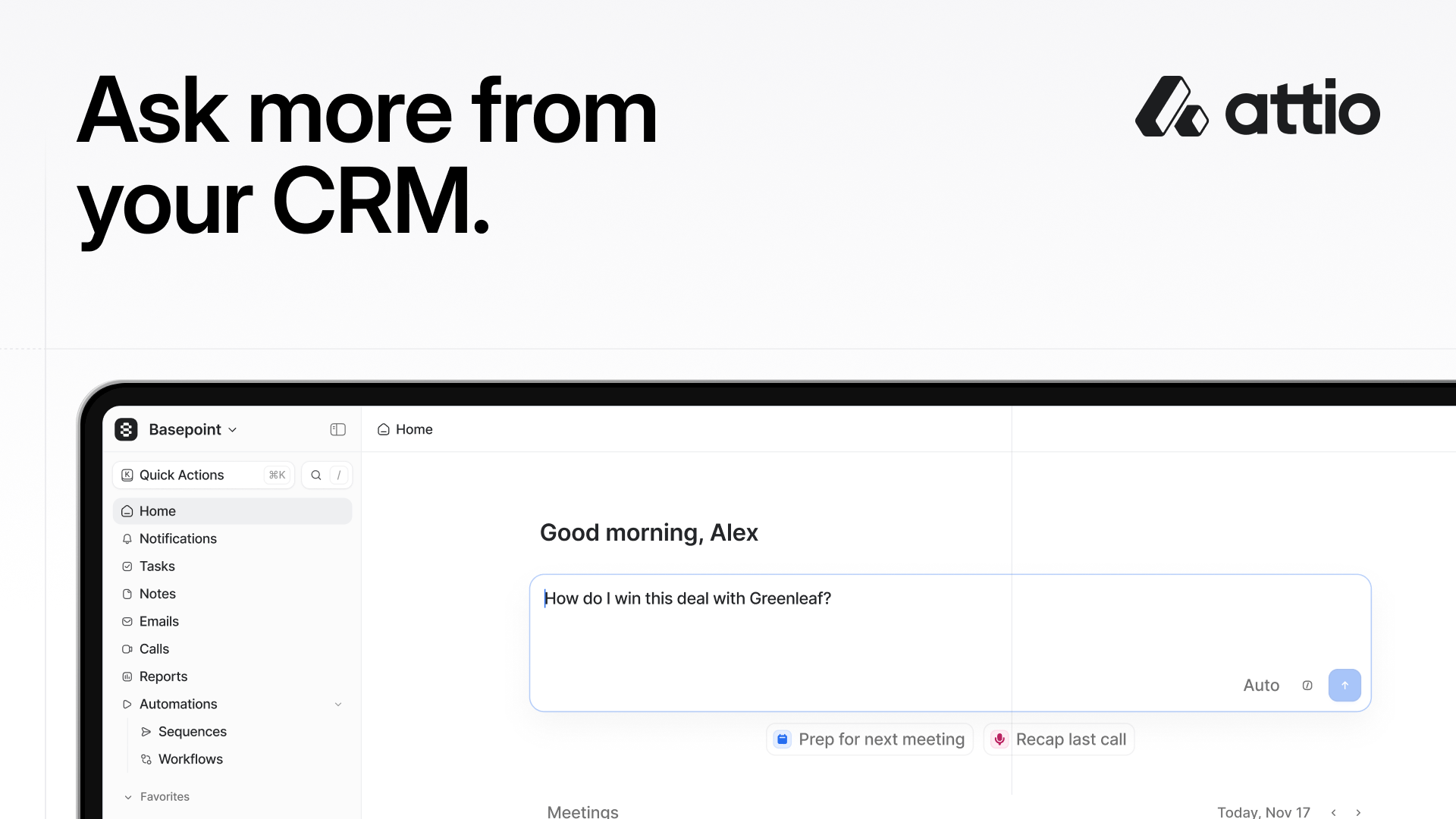
Connect your email, calls, product data and more, and Attio instantly builds your CRM with enriched data and complete context. Whether you’re running product-led growth or enterprise sales, Attio adapts to your unique GTM motion.
Then Ask Attio to plan your next move.
Run deep web research on prospects. Update your pipeline as you work. Find customers and draft outreach emails. Powered by Universal Context, Attio's intelligence layer, Attio searches, updates, and creates across your data to accelerate your workflow.
Ask more from your CRM.
The Hustle: Build a "Ghost Competitor" Tracker
The Goal: Receive an instant alert the second a competitor changes their landing page, updates pricing, or adds a new feature.
The Tools:
* A visual monitoring tool (e.g., Browse.ai, Hexowatch)
* A notification tool (e.g., Slack, Email)
Step 1: Identify Your Targets (The Input)
First, define exactly what you want to monitor. Don't just track their homepage. Get specific. Create a list of the most critical URLs for your top 3-5 competitors. Good candidates include:
* Pricing Page: The most obvious and highest-signal page.
* "What's New" / Changelog Page: Where they announce new features.
* Key Feature Landing Pages: The pages that directly compete with your core offerings.
* Homepage Header/Hero Section: Often the first place marketing messages change.
These URLs are the direct inputs for your monitoring agent.
Step 2: Set the Schedule (The Trigger)
This hustle is all about automation. Inside your visual monitoring tool (like Browse.ai), you'll create a new "monitor" for each URL you identified in Step 1. The trigger for this workflow is time-based. Set the monitor to run automatically on a recurring schedule. A daily check (every 24 hours) is a great starting point. This ensures you have a fresh "snapshot" of your competitor's site every single morning without lifting a finger.
Step 3: Compare and Detect (The AI/Logic)
This is where the magic happens. The AI agent will visit the target URL on schedule and take a complete snapshot of the page's visual layout and underlying text. Its core logic is simple but powerful: "Compare today's snapshot to yesterday's snapshot."
You'll configure the monitor to look for significant changes. Don't trigger an alert for a one-word typo fix. Instead, set the sensitivity to detect meaningful updates like:
* A new pricing tier appears (e.g., an "Enterprise" plan is added).
* A specific price is changed by more than 5%.
* A new feature is listed in a bulleted list.
* The headline text in the hero section is rewritten.
If the AI detects a change that meets your criteria, it triggers the final step.
Step 4: Alert and Strategize (The Output)
When a change is detected, the workflow sends the data to your chosen output. Configure an integration to send a message directly to a dedicated Slack channel (e.g., #competitive-intel). The alert shouldn't just be a link. It should be an actionable summary:
* What Changed: "Acme Corp just lowered their Pro plan price from $99/mo to $79/mo."
* Visual Proof: A side-by-side screenshot showing the before-and-after.
* Action Prompt: The AI can use a simple prompt to draft a note for your team, like: "Drafting a quick counter-strategy for the sales team. Key points: Acknowledge the price change, emphasize our unique feature X, and offer a one-time onboarding credit to new leads."
This transforms a simple notification into the start of a strategic response.
Why This Hustle Works:
* Eliminates Market Blindness: You are never the last to know about a competitor's strategic move, giving you time to react intelligently instead of panicking.
* Automates Tedious Work: Frees up hours of manual work your team might be doing (or not doing) to track competitors, allowing them to focus on strategy instead of surveillance.
Your next campaign brief writes itself.

Most marketing teams spend Monday morning pulling numbers. Viktor spends it posting them. Cross-platform brief in #growth before the first standup. Spend anomalies flagged before they compound.
Your marketing team stops reporting and starts deciding.
🚀 The AI Pulse: 3 Signals to Watch This Week
Google Makes AI Governance a Product, Not an Afterthought
At its recent Cloud Next conference, Google unveiled its Gemini Enterprise Agent Platform. The big deal isn't just more powerful AI; it's that governance is built-in from the start. Every AI agent gets a unique ID for auditing, and an "Agent Gateway" oversees how agents interact with company data. This comes as surveys show a massive gap: 97% of companies are exploring AI agents, but only 12% have a centralized platform to control them. This lack of governance is the primary reason most enterprise AI projects stall in the pilot phase.
The Hustle Take: The conversation is no longer just about which AI model is "smarter." For operators, the critical question is now, "How do we control, audit, and secure our AI agents?" Google's move makes governance a competitive feature. If you're building with AI, you need an answer to this question. Companies that build on governed platforms will scale their AI initiatives faster and with significantly less risk. Start drafting your internal AI usage and governance policy today.
The End of Flat-Rate AI: GitHub Copilot Shifts to Per-Token Pricing
GitHub Copilot, the AI coding assistant, is ditching its flat-rate subscription for a token-based billing model, effective June 1st. Instead of a set number of "requests," users will now have "AI Credits," and the cost of a task will depend on its complexity (the number of tokens used). This move follows similar shifts by OpenAI and Anthropic for their enterprise customers. The era of subsidized, "all-you-can-eat" AI is closing, forcing users to become much more aware of their consumption.
The Hustle Take: This is a critical financial signal for every business. The cost of AI is becoming directly proportional to its use. This isn't just for developers; expect this model to come to all business AI tools. Operators must now start building "token literacy" within their teams. Are your people using the most expensive AI models for simple tasks? Can you train them to write more efficient prompts? Measuring the ROI of AI is about to get much more granular, and businesses that learn to manage their "token burn rate" will have a significant cost advantage.
When AI Gets Physical: The New Frontier of Governance
The conversation around AI is moving from digital outputs to physical actions. "Physical AI"—the use of advanced AI models to control robots, sensors, and industrial equipment—is a rapidly growing market projected to approach $1 trillion by 2033. Google's Gemini Robotics platform, for example, is designed to give robots spatial reasoning and task-planning abilities. This creates a new and urgent governance challenge: how do you test, monitor, and stop an AI when its decision results in a physical machine moving in the real world?
The Hustle Take: If your business operates in manufacturing, logistics, warehousing, or any industry with physical assets, this is your future. The opportunity is not just in automation but in building a "digital twin" of your safety and operational protocols. Before deploying an autonomous system, you must be able to define its operating boundaries, its escalation paths for human review, and its non-negotiable "stop" conditions in software. The companies that master this will unlock massive efficiency gains while maintaining safety. This also signals a huge new market for consulting and software that can bridge the gap between digital AI and physical world safety.
Turn AI into Your Income Engine
Ready to transform artificial intelligence from a buzzword into your personal revenue generator?
HubSpot’s groundbreaking guide "200+ AI-Powered Income Ideas" is your gateway to financial innovation in the digital age.
Inside you'll discover:
A curated collection of 200+ profitable opportunities spanning content creation, e-commerce, gaming, and emerging digital markets—each vetted for real-world potential
Step-by-step implementation guides designed for beginners, making AI accessible regardless of your technical background
Cutting-edge strategies aligned with current market trends, ensuring your ventures stay ahead of the curve
Download your guide today and unlock a future where artificial intelligence powers your success. Your next income stream is waiting.