- AI Hustle Tips
- Posts
- SAP’s Agentic Staff, Scotiabank’s AI Oversight, & Hyundai’s Physical AI
SAP’s Agentic Staff, Scotiabank’s AI Oversight, & Hyundai’s Physical AI
Plus, how to build "CEO research" into a high-impact welcome gesture.
Sponsored by

AI HUSTLE | April 16, 2026
Welcome to AI Hustle, the newsletter that translates complex AI workflows into clear business wins. This week, we're showing you how to use AI to create a "wow" moment for your most valuable clients from day one. Plus, we're breaking down how enterprise giants like SAP and Scotiabank are using AI agents to slash operational drag, and why Hyundai is betting its future on robots that think. Let's get into it.
Affordable Housing, Reimagined

Affordable housing doesn’t have to mean sacrificing design.
Azure Printed Homes creates beautifully designed, modern homes that are built efficiently and priced accessibly (starting around ~$40,000+).
Using 3D printing and automated manufacturing, we deliver homes that are:
• Thoughtfully designed
• Sustainably built
• Ready in ~20 days
Small footprint. Big impact.
This is what the future of housing looks like.
America needs millions of homes. We can build them at scale. That's not a vision, it's already happening in a warehouse in LA, with our second factory opening in Denver this month.
The Hustle: The AI-Powered "Welcome Wagon"
The Goal: Create an unforgettable first impression for high-ticket clients by sending a hyper-personalized welcome gift, automated by AI.
The Tools:
* CRM: Salesforce, HubSpot, or similar
* AI Research Agent: Clay, a custom GPT, or similar web-crawling tool
* Task Manager: Asana, Trello, ClickUp, or similar
Step 1: The Client Signs (The Input)
It all starts in your Customer Relationship Management (CRM) tool. When a new enterprise or high-value client signs their contract, their deal stage is updated. This record contains all the key information: the company name, the primary contact (e.g., the CEO or project lead), and the contract value. This is the single source of truth that will kick off our entire workflow.
Step 2: The Deal Closes (The Trigger)
The automation is triggered when the deal's status in your CRM officially changes to "Closed-Won." Using a native automation tool within your CRM or a connector like Zapier, this status change initiates a webhook or API call. This is the signal that tells our AI system it's time to get to work.
Step 3: The AI Deep Dive (The AI/Logic)
The trigger sends the primary contact's name and company to an AI research agent. The agent's job is to discreetly scan public sources—like the contact's LinkedIn profile, recent Twitter/X posts, podcast interviews, or articles they've written. The AI is specifically looking for hobbies, personal interests, or causes they support (e.g., a love for rare single-origin coffee, a passion for fly-fishing, or support for a specific animal shelter). The AI then synthesizes this research and suggests 3-5 unique, high-quality gift ideas under a pre-set budget (e.g., $100), and drafts a personalized welcome note referencing the discovered interest.
Step 4: The Human Touch (The Output)
The AI doesn't automatically buy the gift. Instead, it creates a new task in your Account Manager's project board. The task is pre-populated with all the key info: the client's name, the AI's research summary, the top 3 gift suggestions (with purchase links), and the drafted welcome note. The task is titled: "Approve & Ship Welcome Gift for [Client Name]." The Account Manager simply reviews the suggestions, makes the final choice, and executes the purchase and shipping.
Why This Hustle Works:
* Scales the Unscalable: It automates the time-consuming research required for genuine personalization, allowing you to deliver a "high-touch" experience for every major client, not just a select few.
* Builds Human Connection: It proves you see the client as a person, not just a contract. This small, early gesture builds immense goodwill and can be a powerful anchor for long-term retention.
Your competitors already read this every morning.
The AI Report keeps 400,000+ executives ahead of every major AI move — in 5 minutes a day. Trusted by leaders at the world's top companies. The question isn't whether AI is changing your industry. It's whether you'll see it coming.
🚀 The AI Pulse: 3 Signals to Watch This Week
SAP Deploys AI Agents to Fight Operational Bloat
SAP is embedding agentic AI directly into its core HR and finance software to automate tedious back-office tasks. These AI agents will work in the background to spot and fix data-syncing errors between systems, answer employee HR questions by referencing internal documents, and automatically analyze compensation data to ensure compliance with pay transparency laws. The goal is to slash the time human teams spend on administrative troubleshooting and manual data entry.
The Hustle Take: Enterprise software is becoming an active workforce, not just a passive tool. This signals that the "AI agent" trend is moving from theory to practical application. For operators, this means the software you already use will start doing the work for you. The opportunity is to map out the most repetitive, soul-crushing tasks in your own operations and start seeking out tools that can automate them, freeing your team for strategic work that actually drives revenue.
How Scotiabank Deploys AI Safely to its Entire Team
Canadian financial giant Scotiabank has launched a centralized AI platform, "Scotia Intelligence," to give its entire workforce access to powerful AI tools within a secure and governed environment. Instead of a free-for-all, the bank has created a single, controlled system where employees can build and use AI assistants for tasks ranging from AI-assisted coding to automating customer service responses. This framework ensures all AI use cases are reviewed for fairness and transparency and that all employees receive mandatory training.
The Hustle Take: The biggest blocker to enterprise AI adoption isn't technology—it's risk. Scotiabank's model provides a blueprint for any business. You don't need a multi-million dollar platform; start with a one-page "AI Usage Policy." Outline approved tools (e.g., ChatGPT Team, Claude Pro), set clear rules for handling sensitive data, and host a simple training session. This creates a "safe sandbox" for your team to experiment and innovate without putting the business in jeopardy.
Hyundai's Big Bet on 'Physical AI'
Hyundai is investing billions to move AI from the screen into the physical world. The company is developing humanoid robots (via its acquisition of Boston Dynamics) and other intelligent systems to work alongside humans in its factories, with plans to expand into logistics and mobility services. This "physical AI" strategy is about creating machines that can perceive, reason, and act in real-world environments, moving beyond purely digital automation.
The Hustle Take: This is a clear signal that AI's impact is expanding beyond bits and bytes to atoms. While most businesses won't be hiring humanoid robots next year, the underlying trend is critical for anyone who deals with physical goods or services. The cost of robotics and spatial intelligence is falling fast. Operators in logistics, manufacturing, agriculture, and even retail should start identifying the most inefficient physical processes in their value chain. The solutions may seem like science fiction today, but they'll be a competitive advantage tomorrow.
Your ads ran overnight. Nobody was watching. Except Viktor.
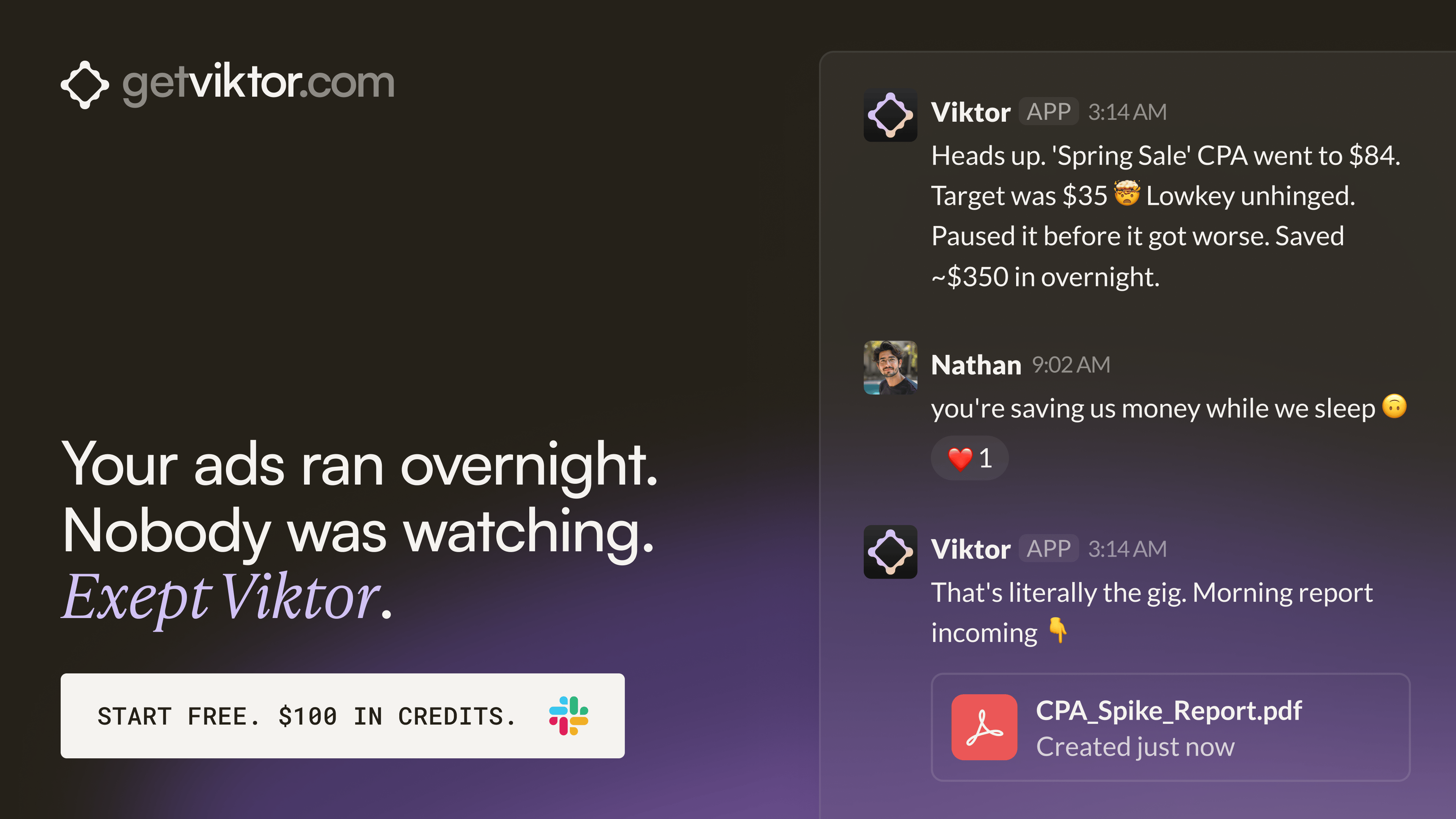
One brand built 30+ landing pages through Viktor without a single developer.
Each page mapped to a specific ad group. All deployed within hours. Viktor wrote the code and shipped every one from a Slack message.
That same team has Viktor monitoring ad accounts across the portfolio and posting performance briefs before the day starts. One colleague. Always on. Across every account.